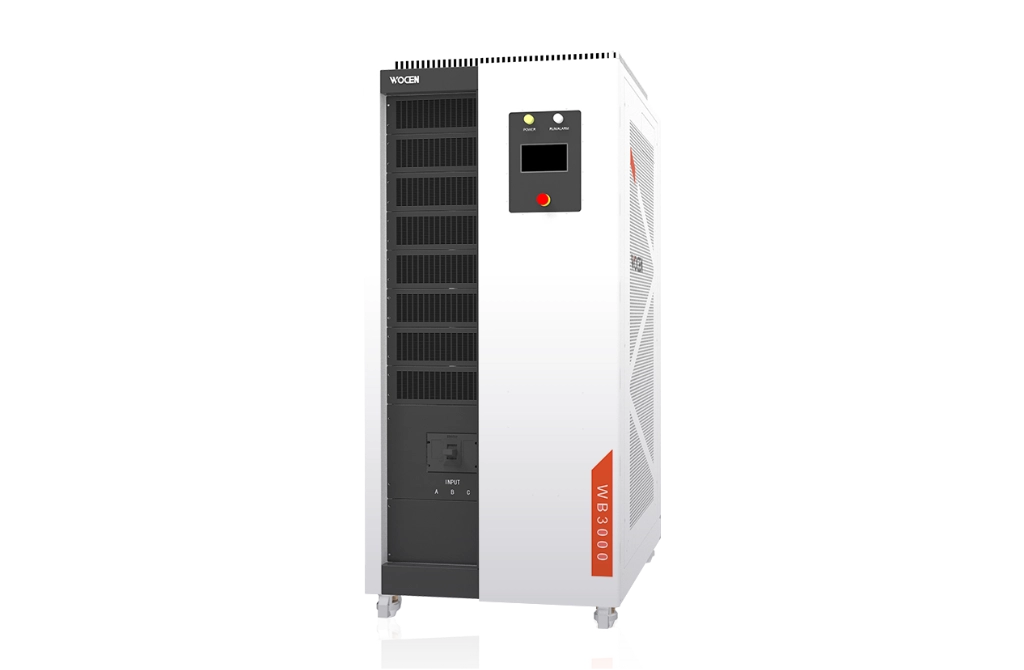
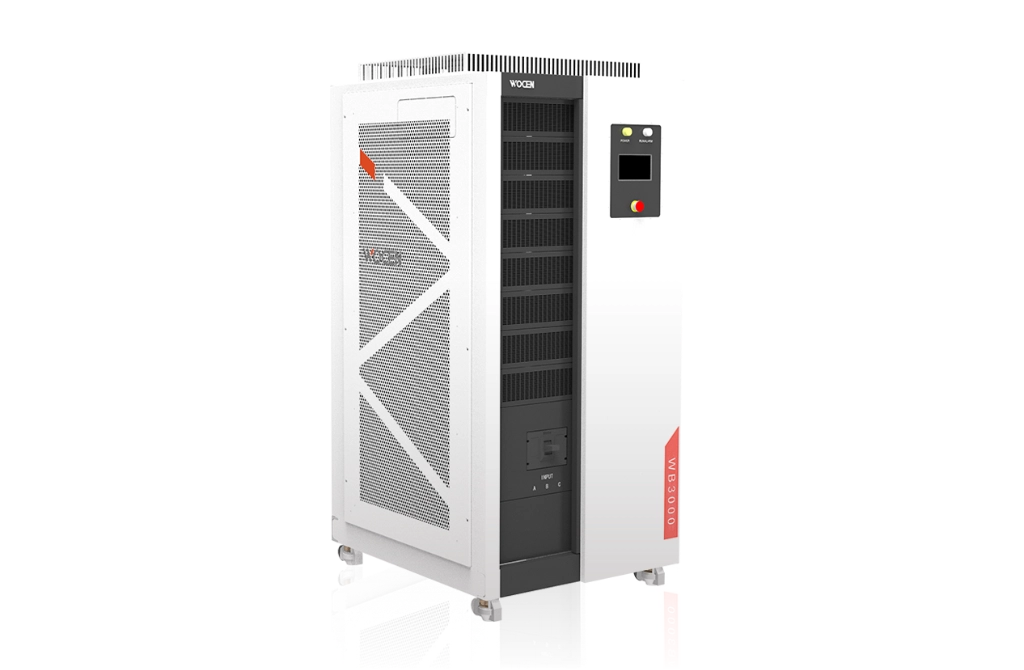
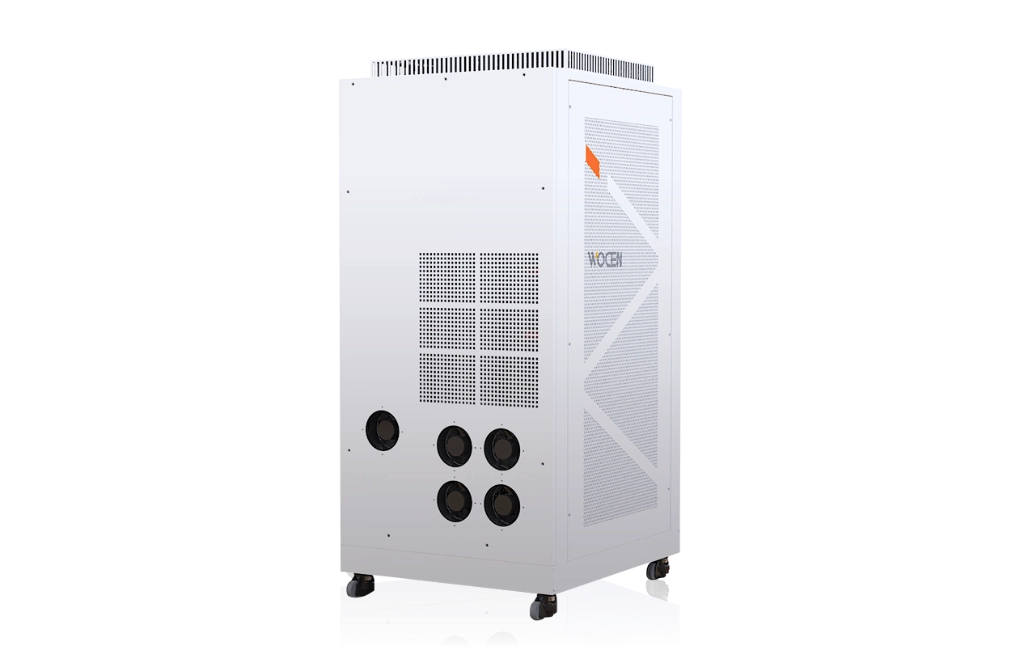
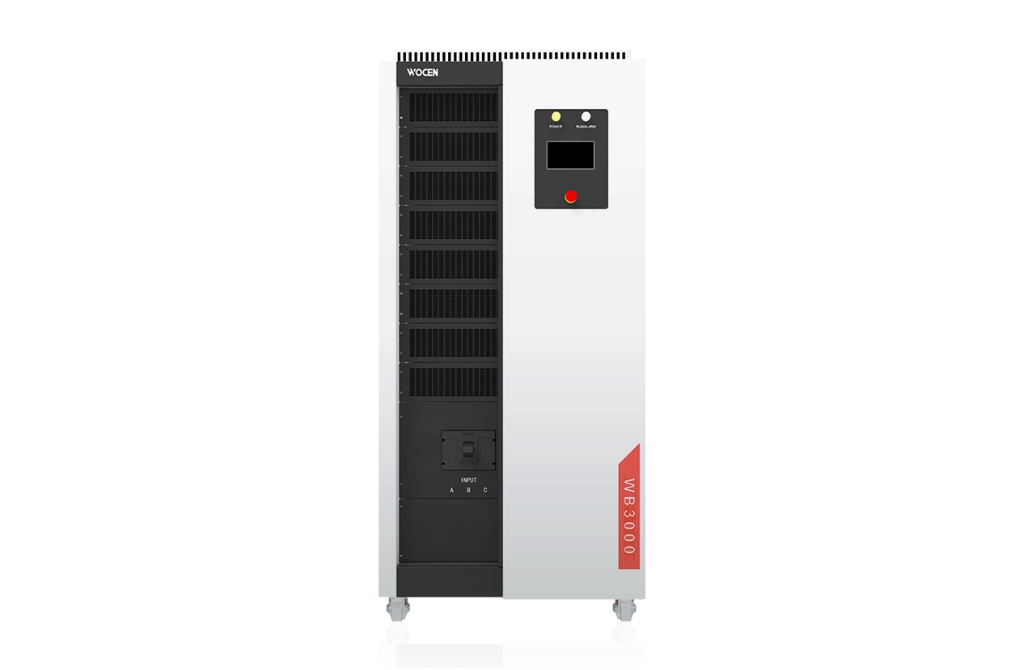
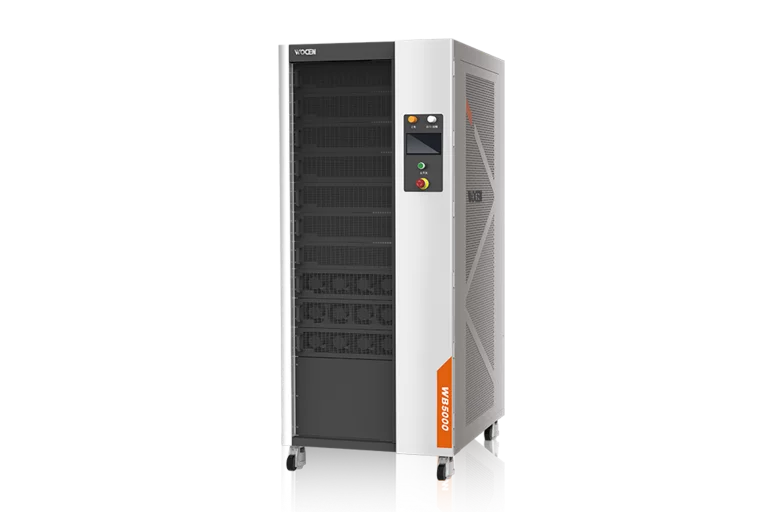
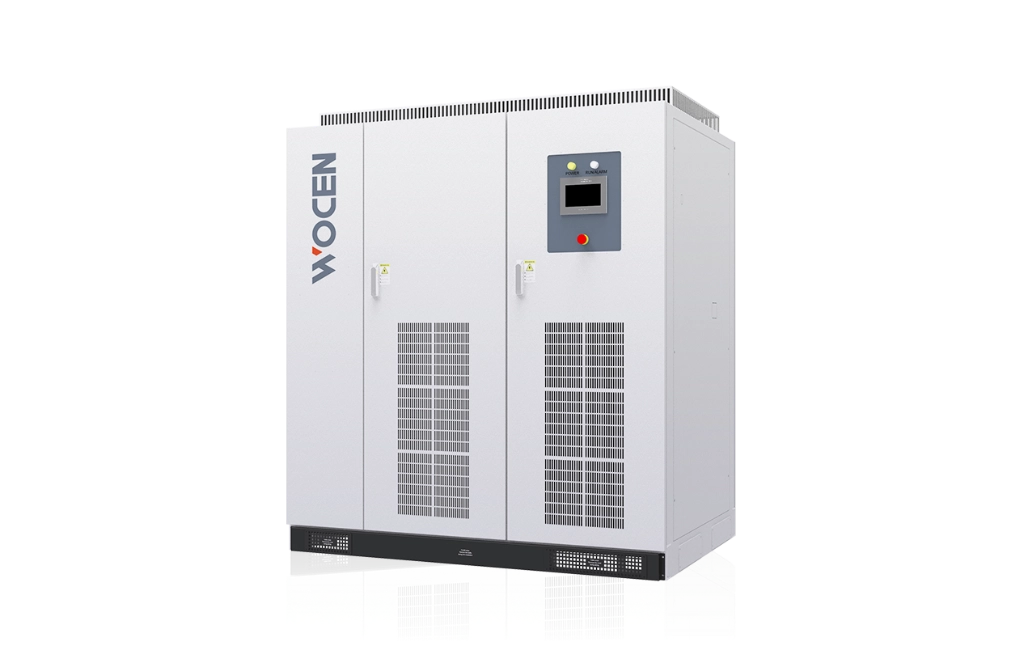
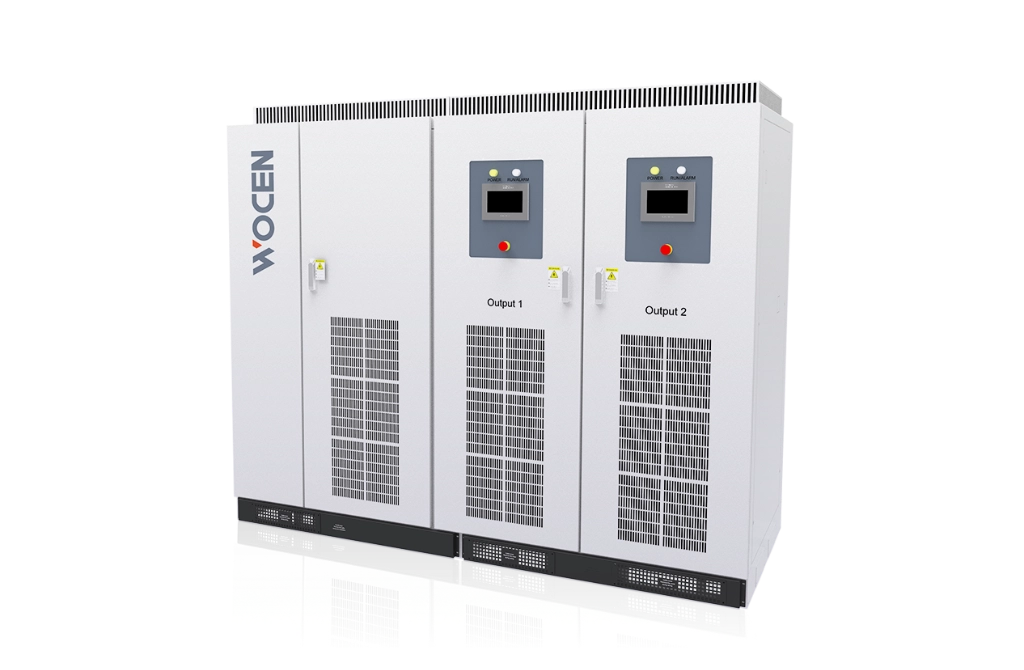
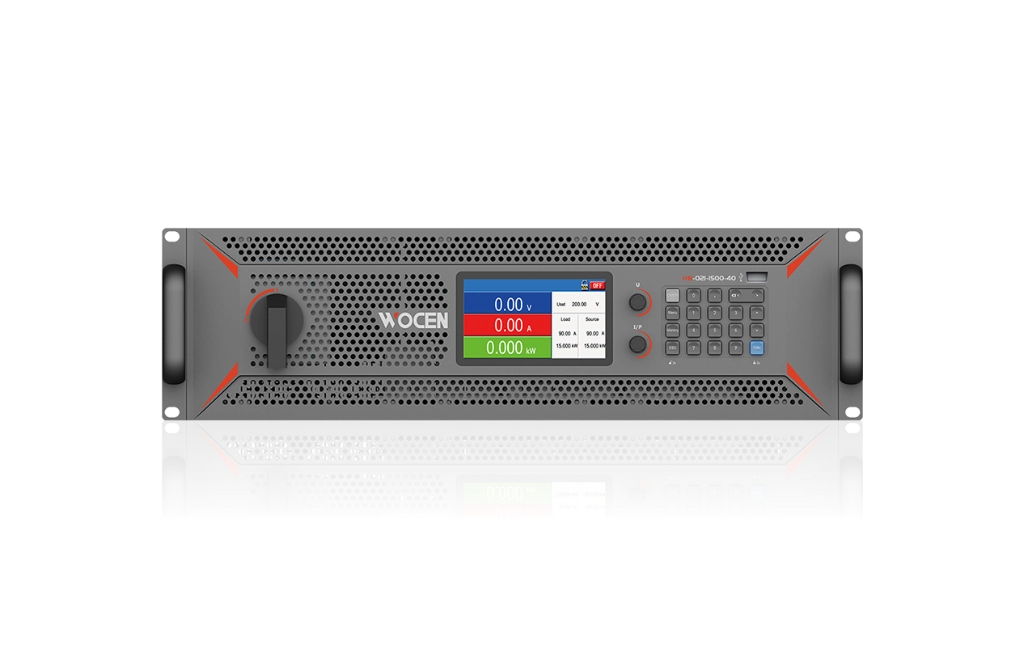
The WB3000 Series is a high-performance bidirectional DC power supply designed for EV drive motor, powertrain, DC charging, and energy storage testing.
Featuring third-generation SiC technology, it delivers high precision, fast dynamic response, and high efficiency. With integrated battery simulation and CV/CC/CP modes, it supports 12–1200 V, 0–1200 A, and 0–600 kW, with flexible parallel expansion for higher power requirements.
Enables bidirectional energy flow across the full power range for stable, reliable, and energy-efficient operation.
02
Battery Simulation & DC Programming
Built-in models for LiFePO₄, NMC, LMO, and other battery types, plus up to 5 user-defined battery characteristic curves.
03
1.3× Peak Current
Supports peak current operation for up to 60 seconds.
04
High Efficiency
Efficiency of >95% for reduced energy consumption and operating costs.
05
High Power Density
Compact design with power density up to 198 kW/m³.
06
High-Precision Digital Control
High-speed digital control technology achieves output voltage accuracy of 0.05% F.S.
07
Low Input Harmonics
PWM rectification with PF >0.99 and input THD <3%.
08
7-Inch Touchscreen
Intuitive operation and clear real-time display for convenient human-machine interaction.
09
Multiple Communication Interfaces
Supports remote control, unattended operation, and integration into automated test systems.
10
Automatic Line Voltage Compensation
Automatically compensates for voltage drops caused by cable losses.
11
Modular Power Design
High-frequency power modules with drawer-type installation for easy maintenance and replacement.
12
Integrated Cooling Design
Optimized cooling channels ensure low temperature rise, stable operation, and extended service life.
Models & Specifications
Model
Rated Power
Output Voltage
Rated Current
Peak Current
Size (WDH)mm
WB3100-1200-300
100KW
24~1200V
±300A
±450A
900*1080*2000
WB3200-1200-600
200KW
24~1200V
±600A
±780A
900*1080*2000
WB3300-1200-900
300KW
24~1200V
±900A
±1170A
900*1080*2000
WB3400-1200-1200
400KW
24~1200V
±1200A
±1560A
1400*1080*2000
WB3500-1200-1200
500KW
24~1200V
±1200A
±1560A
1400*1080*2000
WB3600-1200-1200
600KW
24~1200V
±1200A
±1560A
1400*1080*2000
WB3100-1500-200
100KW
48~1500V
±200A
±260A
1300*1200*2000
WB3200-1500-300
200KW
48~1500V
±300A
±390A
1300*1200*2000
WB3300-1500-500
300KW
48~1500V
±500A
±650A
1300*1200*2000
WB3400-1500-800
400KW
48~1500V
±1000A
±1300A
1500*1200*2000
WB3500-1500-1200
500KW
48~1500V
±1200A
±1560A
1700*1200*2000
WB3600-1500-1200
600KW
48~1500V
±1200A
±1560A
1700*1200*2000
Technical Specifications
Category
Item
Standard version
Output
Version
Standard version
Voltage accuracy
±0.05%F.S.
Current accuracy
±0.05%F.S.
Response time
2ms
Switching time
4ms
Voltage slope
200V/ms
Current slope
300A/ms
Voltage ripple
≤0.1%·F.S.
Current ripple
≤0.1%·F.S.
Input
Input mode
3-phase 3-wire
Voltage
380V ±15%
Frequency
47-63Hz
Current distortion
≤3%
Power factor
≥0.99
Security features
Insulation resistance
≥20MΩ (500Vdc)
Voltage resistance
3000VDC(60s, no flashover, breakdown)
Ground resistance
≤100mΩ
Working environment
Ambient temperature
−10℃ ~ 40℃
Ambient humidity
10%~90%(no condensation)
Altitude
≤2000m
Communication interface
RS485, CAN, LAN
Protection grade
IP21 (Indoor)
Cooling mode
Forced air cooling
Optional Functions
PDU: It provides convenient wiring at the load end, which is conducive to on-site system integration and improves safety.
Discharge device PDSB: When the grid fails, or the power supply is abnormal, it effectively prevents damage to the test equipment by reverse energy.
Capacitor cabinet: In order to meet the needs for smaller voltage fluctuation value, in order to achieve or even exceed the dynamic characteristics of imported equipment.
Insulation monitoring function: Online real-time monitoring of the insulation resistance of the output positive/negative pole to the ground to ensure the safety of equipment power use.
Applications
Electric Vehicle Motor Testing
Electric Vehicle Motor Controller Testing
Electric Vehicle Powertrain Testing
Electric Vehicle Testing
Electric Vehicle DC-DC Converter Testing
Hybrid Vehicle Generator Testing
Fuel Cell System Testing
Fuel Cell DC-DC Converter Testing
EV Charging Pile Testing
Battery Testing
Bidirectional DC Power Supply Operation
Enables bidirectional energy flow across the full power range. Supports Constant Voltage (CV), Constant Current (CC), and Constant Power (CP) modes, with user-defined voltage, current, and power settings.
Battery Simulation
1) Battery Type Mode Supports five battery types: LMO, LCO, LiFePO₄, NMC, and lead-acid. Users can configure the number of cells in series and parallel, as well as the initial SOC. IV curves can be previewed before operation.
2) Custom Battery Mode Users can define battery characteristics and create custom IV curves. Up to 5 custom IV curve profiles can be stored and recalled when needed.
During battery simulation, the system can dynamically generate and display IV curves based on SOC changes, while monitoring SOC, charging/discharging status, output voltage, output current, and output power in real time.
DC Programming
Provides Step and Ramp programming modes. Each mode supports up to 10 programmable profiles, with each profile containing up to 50 data points.
Emergency Stop
Supports both local and external emergency stop controls. In emergency situations such as motor runaway, the power output can be immediately shut down to help prevent damage to the customer's equipment.
Line Voltage Compensation
Software compensation: Users can set the output cable impedance, and the system automatically compensates for voltage drops based on the configured line resistance.
Self-Discharge Function
Disabled: After receiving a stop command, the system maintains the current output voltage and quickly disconnects the output.
Enabled: After receiving a stop command, the system rapidly reduces the output voltage to below a safe level before disconnecting the output.
Self-Diagnosis & Protection
Comprehensive protection functions cover input overvoltage/undervoltage, overfrequency/underfrequency, overcurrent, and phase loss, as well as output overvoltage, overcurrent, overload, short circuit, and reverse polarity.
The system continuously monitors operating parameters and provides additional protection against overtemperature, DC bus overvoltage, and drive overcurrent. In abnormal conditions, it automatically identifies faults and rapidly disconnects the main circuit to protect the equipment and ensure operational safety.
Communication
Standard interfaces include RS485, Ethernet, and CAN. The system supports remote control, unattended operation, and integration into automated test systems.
Through the communication interfaces, users can start or stop the power supply, configure operating parameters, and monitor operating status, real-time parameters, and alarm information. DBC files are available.
Black Box Function
Automatically records electrical parameters before and after an alarm event, providing reliable data for fault analysis and troubleshooting.
Pre-Alarm & Parameter Limit Settings
Users can configure upper and lower pre-alarm thresholds for voltage, current, and power, with real-time warning prompts based on operating conditions.
Output Parameter Limits
Upper limits can be configured for output voltage, current, and power settings, helping prevent incorrect operation and potential equipment damage during different testing stages.
Temperature Monitoring
Real-time temperature monitoring of critical components, including SiC power modules and reactors, helps ensure safe and stable system operation.
Intelligent Fan Speed Control
The cooling fans automatically switch between off, half-speed, and full-speed modes according to the temperature of internal critical components, reducing operating noise while improving overall efficiency.
DC High-Voltage Output Relay Control
The DC output is controlled by a relay, enabling convenient and flexible remote control of the power output.
Parallel Operation
Supports flexible parallel connection of multiple units of the same model, enabling 100–600 kW output configurations to meet higher power requirements.